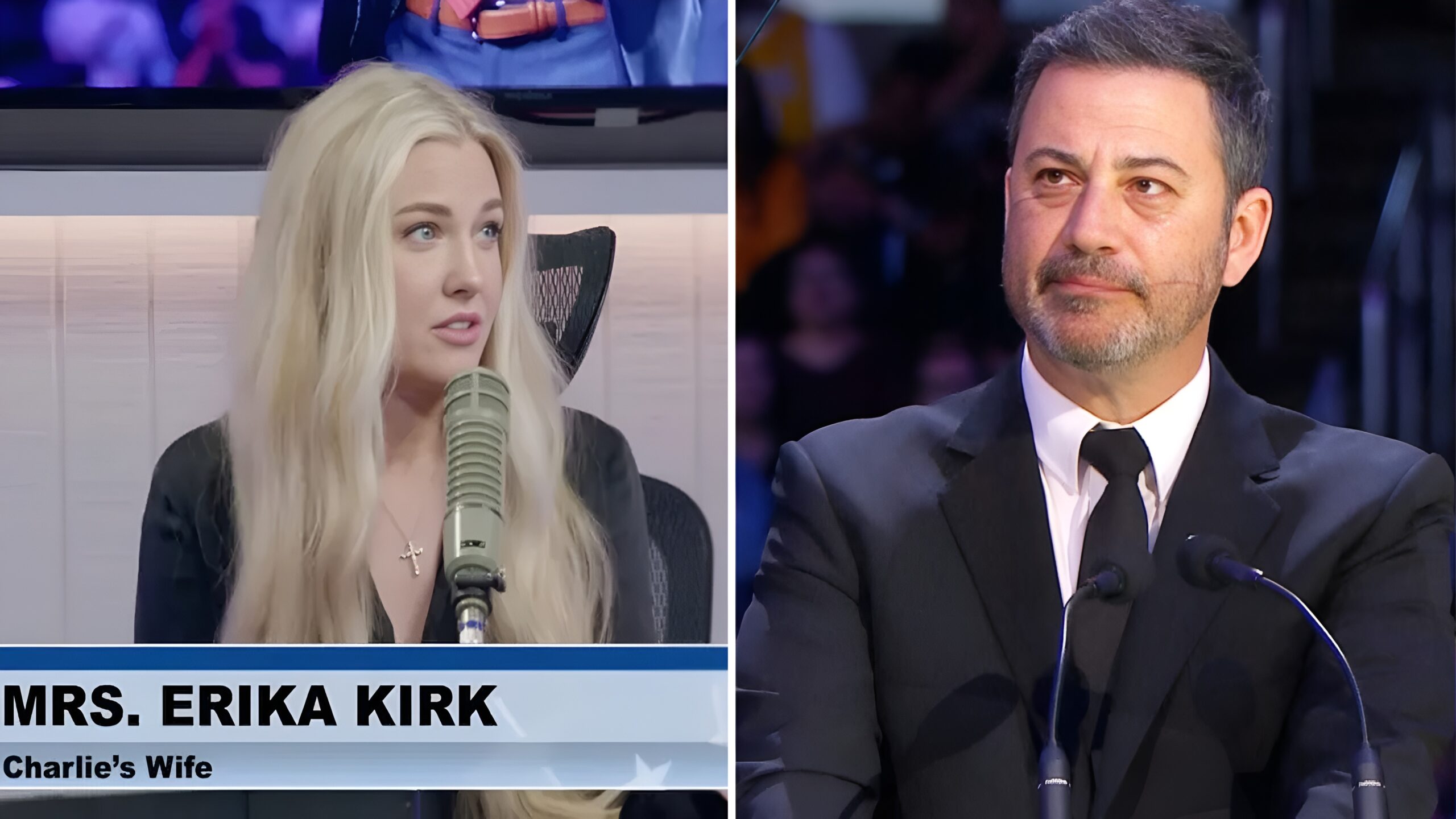
For years, Jimmy Kimmel has been one of the most recognizable faces in late-night television. His sharp political humor, celebrity interviews, and viral comedy segments helped Jimmy Kimmel Live! remain a major part of ABC’s lineup for nearly two decades. But after a recent wave of controversy surrounding the comedian, conversations about the future of the show have intensified — and now industry rumors are suggesting ABC executives may be considering dramatic changes.
According to growing online speculation, network insiders are allegedly discussing possible alternatives to Kimmel’s current format amid reports of declining ratings and increasing audience backlash. One of the most talked-about rumors making rounds on social media is the possibility of a new politically focused program inspired by conservative commentator Charlie Kirk — potentially hosted by Erika Kirk.
While ABC has not officially confirmed any replacement plans, the rumors alone have sparked fierce debate across both entertainment and political circles.
The latest problems for Kimmel reportedly began after comments made during a recent monologue triggered outrage online. Critics accused the late-night host of crossing the line between satire and personal attacks, especially given the increasingly tense political climate in the United States.
Clips from the segment spread rapidly across platforms like X, TikTok, and YouTube, where users from both political sides weighed in. Some defended Kimmel’s style as standard late-night comedy, arguing that political satire has always been part of American television culture. Others claimed the jokes reflected a broader problem within modern late-night programming: increasingly partisan commentary that alienates large portions of viewers.
What made the situation worse for Kimmel was the timing. The controversy arrived during a period when late-night television overall has already been struggling with shrinking audiences, changing viewer habits, and increased competition from podcasts, livestreams, and independent online creators.
Unlike the peak late-night era of the 1990s and early 2000s, viewers today no longer rely on network television for entertainment or political commentary. Viral clips often matter more than full episodes, and audiences have become fragmented across dozens of platforms.
Still, critics say Kimmel’s recent controversy accelerated an already existing decline.
While exact ratings numbers vary depending on the reporting source and demographic category, entertainment analysts have increasingly pointed toward declining viewership for traditional late-night programs across the board.
Industry observers note that younger audiences especially have shifted away from conventional TV formats. Instead of sitting through hour-long talk shows, many now consume highlights through social media feeds. This trend has affected nearly every major host, from network veterans to newer streaming personalities.
However, some commentators argue Kimmel’s political positioning may have amplified the problem. Over the last several years, late-night comedy has become more politically charged, with many hosts openly criticizing conservative politicians and media figures. Supporters see this as speaking truth to power. Opponents view it as partisan activism disguised as comedy.
As backlash intensified online, hashtags calling for boycotts briefly trended, and several commentators claimed advertisers were privately monitoring audience reactions closely.
That’s where the replacement rumors began.
The most surprising part of the speculation involves the idea of a program connected to Charlie Kirk’s brand of political commentary.
Kirk, best known as the founder of Turning Point USA and a major conservative media personality, has built a massive online audience through podcasts, speeches, and social media engagement. His supporters argue that he connects with younger conservative viewers in a way traditional television rarely has.
The rumored concept reportedly involves a more discussion-based nightly program aimed at politically engaged audiences, potentially hosted by Erika Kirk. Although details remain unclear and entirely unconfirmed, the idea itself has generated enormous attention online.
Some conservatives praised the possibility, claiming network television desperately needs ideological diversity after years of predominantly liberal late-night programming.
Others were skeptical, questioning whether a politically driven show could succeed in the traditional late-night format at all.
Entertainment insiders also point out that replacing a long-established host like Kimmel would be an extremely risky move for ABC. Despite controversies and ratings concerns, Kimmel remains a major brand with strong industry relationships and years of experience in mainstream entertainment.
The situation surrounding Kimmel highlights a much larger issue within the television industry: late-night TV may be losing cultural dominance altogether.
A decade ago, late-night hosts were among the most influential voices in entertainment and politics. Viral monologues shaped national conversations, celebrity interviews dominated YouTube trends, and network shows generated massive ad revenue.
Today, the media landscape looks completely different.
Independent creators can build audiences of millions without network backing. Political podcasts frequently outperform television broadcasts. Streamers and influencers dominate younger demographics. Even celebrities increasingly choose podcasts over traditional talk-show appearances because conversations feel less scripted and more authentic.
This shift has forced networks to rethink what the future of late-night entertainment should even look like.
Some believe political commentary is the only way for hosts to stay relevant. Others think audiences are exhausted by constant political conflict and want entertainment that feels lighter and more universal.
The rumored “Charlie Kirk Show” concept reflects that broader uncertainty. Networks may be exploring whether alternative formats or ideologically different programming could attract viewers who currently feel ignored by mainstream entertainment media.
At this stage, there is no official confirmation that ABC plans to cancel Jimmy Kimmel Live! or replace it with another show. Much of the discussion remains speculative and fueled by online rumors, commentary channels, and political influencers.
Still, the attention surrounding the controversy demonstrates how fragile the modern television landscape has become. One viral moment can now trigger days of backlash, advertiser concerns, and endless social media debate.
For Kimmel, the challenge moving forward may not simply be recovering ratings — it may be rebuilding broader audience trust in an era where viewers are increasingly polarized and entertainment itself has become deeply political.
Whether ABC stands firmly behind Kimmel or eventually experiments with a dramatically different direction remains to be seen.
But one thing is clear: the future of late-night television is far less certain than it once was.