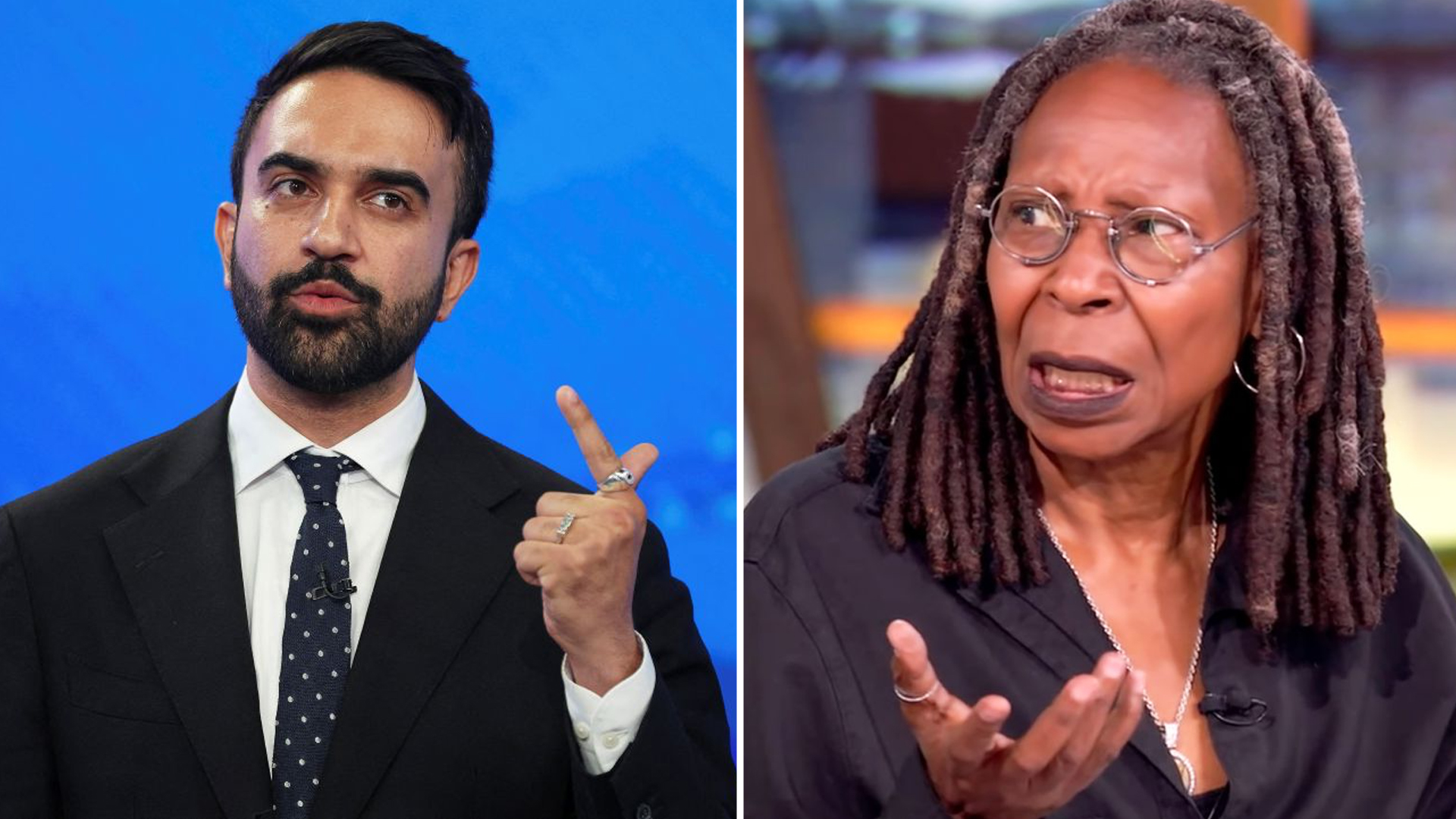
New York City has always been a magnet for celebrities, billionaires, artists, and business leaders. But under the leadership of Zohran Mamdani, some wealthy residents are beginning to question whether the city is still financially worth it — and now Whoopi Goldberg has found herself at the center of that growing debate.
According to viral reports circulating online, Goldberg is increasingly frustrated with proposed tax policies backed by Mayor Mamdani and may even be considering leaving New York altogether. The controversy exploded after social media users shared a quote allegedly connected to the actress that read: “I can’t live here anymore. He wants my savings.”
Although the statement has not been officially verified, the story has rapidly gained traction across political blogs, entertainment pages, and online discussion forums. What started as celebrity gossip has quickly turned into a larger political conversation about taxes, wealth, and the future of America’s biggest city.
Ever since Mamdani entered City Hall, he has made it clear that his administration intends to reshape New York’s economic structure. A longtime progressive voice and democratic socialist figure, the mayor campaigned on promises to make the city more affordable for ordinary residents struggling with soaring living costs.
His proposals include:
- Increasing taxes on ultra-wealthy residents
- Expanding rent protections
- Funding large public housing projects
- Creating city-backed grocery programs
- Expanding free transportation services
- Raising revenue from luxury real estate owners
Supporters see these plans as necessary reforms in a city where working families increasingly feel priced out. But critics argue that aggressive tax increases could push away the very people who contribute a major share of New York’s tax revenue.
That’s why Goldberg’s reported frustration has drawn so much attention. Goldberg is not just another celebrity. For years, she has been viewed as one of the most influential liberal voices in American entertainment through her role on The View. Because of that, many online users were shocked to see her name attached to criticism of a progressive mayor.
Conservative commentators quickly seized on the moment, arguing it proves even wealthy left-leaning celebrities become uncomfortable when progressive economic policies directly impact their finances. One political commentator wrote: “Progressive politics sound great until the tax bill arrives.”
Meanwhile, others defended Mamdani and criticized Goldberg for allegedly complaining while average New Yorkers struggle with inflation, rent, and basic expenses. The divide reflects a broader national debate happening across many large American cities where affordability issues continue getting worse.
The discussion around Goldberg comes at a time when many financial experts are already warning about “tax migration.” Over the last several years, wealthy Americans have increasingly relocated from states like New York and California to lower-tax states such as Florida and Texas.
For high earners, even a small percentage increase in taxes can represent millions of dollars over time. Critics of Mamdani argue that New York risks accelerating that trend if it becomes perceived as hostile toward wealth creation and business success. Some economists have warned that if enough wealthy residents leave, the city could eventually face declining tax revenues despite increasing tax rates.
Others disagree and argue that fears of a mass exodus are often exaggerated politically. Mamdani’s supporters insist the backlash is missing the bigger picture. They argue New York’s inequality crisis has become impossible to ignore. Housing costs continue breaking records. Homelessness remains a major issue. Public transportation infrastructure needs billions in upgrades. Childcare costs are crushing many families.
To progressive voters, asking wealthy residents to contribute more is not radical — it is necessary. Some activists even celebrated the backlash from celebrities and billionaires, saying it proves the mayor is challenging systems that have protected the wealthy for decades.
One supporter posted online: “If millionaires leaving is the price for affordable housing and better public services, most working people won’t complain.” Still, not everyone within the Democratic Party fully agrees with Mamdani’s approach. Some moderates fear the administration could move too aggressively and create long-term economic instability.
Part of the reason the story has become so widely discussed is because Goldberg has long been associated with New York City culture. Unlike many celebrities who treat the city as a temporary residence, Goldberg built much of her public identity around being a true New Yorker.
Over the years, she frequently praised the city’s diversity, energy, and cultural influence. That is why rumors about her possibly leaving have resonated so strongly online. To critics of Mamdani, the story symbolizes broader dissatisfaction among successful residents who feel increasingly targeted politically. To supporters, it symbolizes resistance from wealthy elites unwilling to sacrifice financially while ordinary residents continue struggling.
Whether Goldberg actually leaves New York or not, the controversy highlights the enormous pressure facing modern cities trying to balance social programs with economic competitiveness.
New York remains one of the world’s financial and cultural capitals, but it is also becoming increasingly unaffordable for both working-class families and some wealthy residents who feel heavily taxed. Mamdani’s administration is betting that bold progressive reforms can reshape the city into a more equitable place. Critics worry those policies could weaken the economic engine that made New York successful in the first place.
That conflict is likely to define the city’s politics for years to come.
For now, Goldberg’s rumored frustration has become more than just celebrity drama. It has evolved into a symbol of a much larger national argument over taxes, wealth, fairness, and the future of urban America. And as New York enters this new political chapter under Mayor Mamdani, every major celebrity reaction — real or rumored — is likely to spark another round of intense debate.
NOTE: This is SATIRE, not real news.